
Redact exhibits and signed documents without breaking the record.
Court filings, notarized instruments, and signed exhibits carry identifiers you're required to remove before they're filed, recorded, or disclosed. Scanon finds them across PDFs, scans, and Office files — and leaves the document readable.
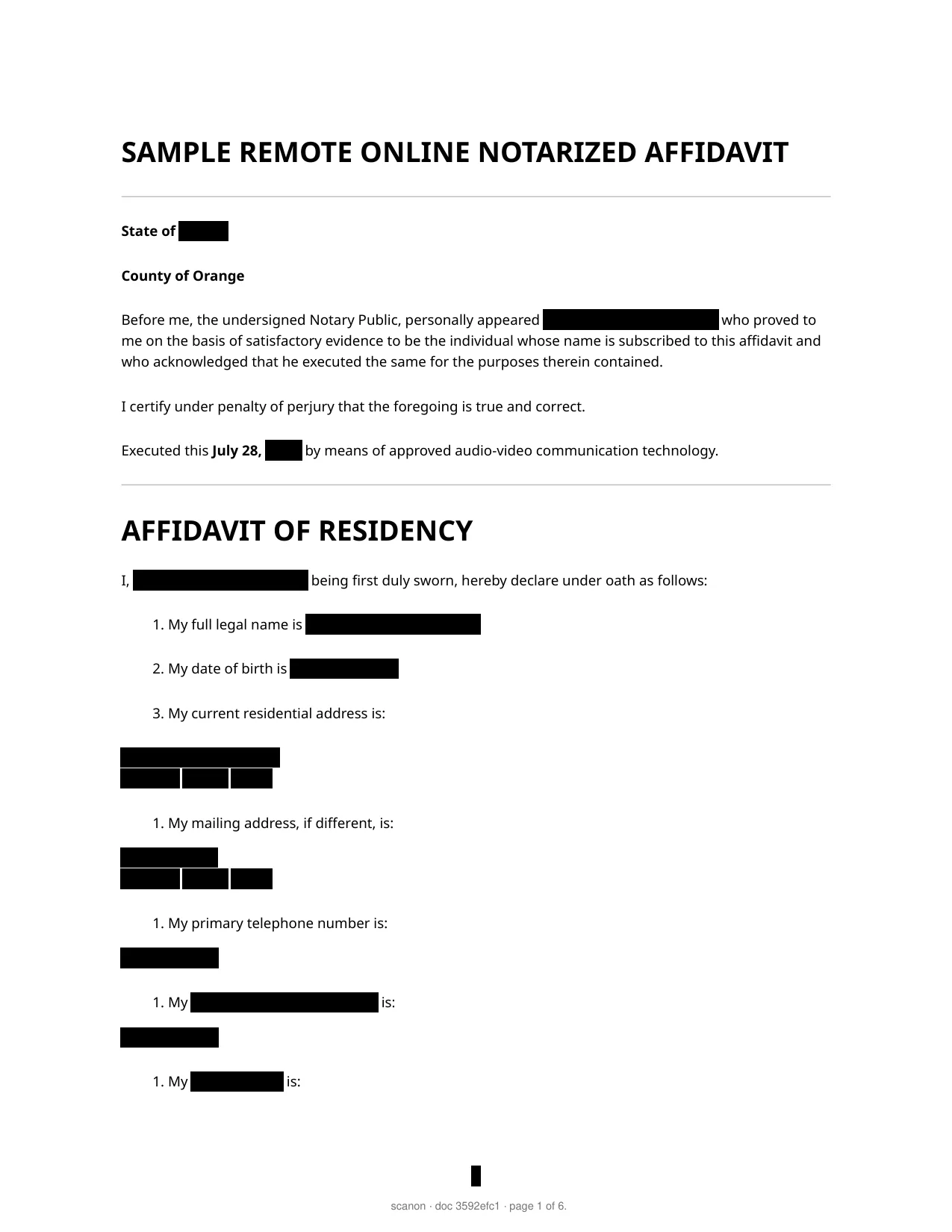
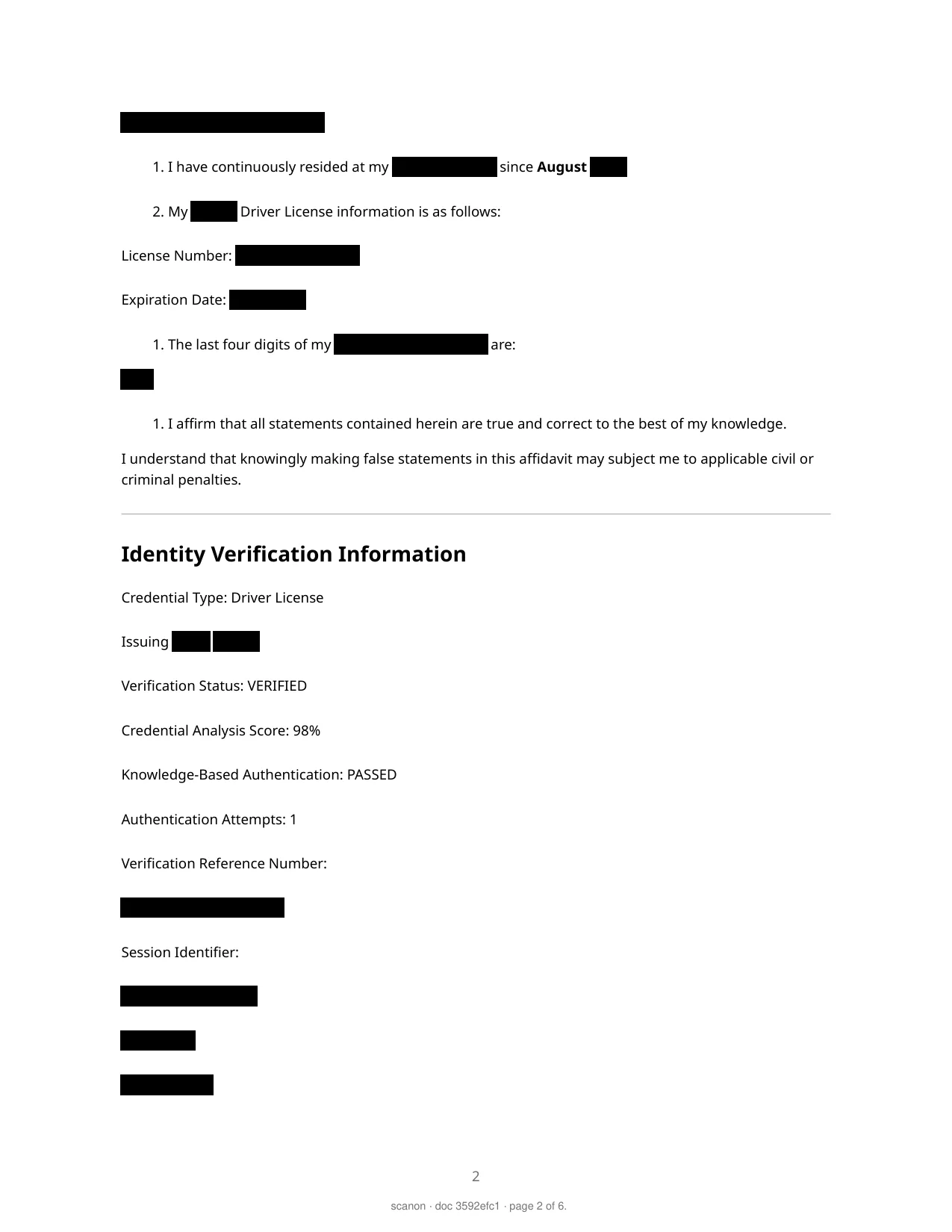
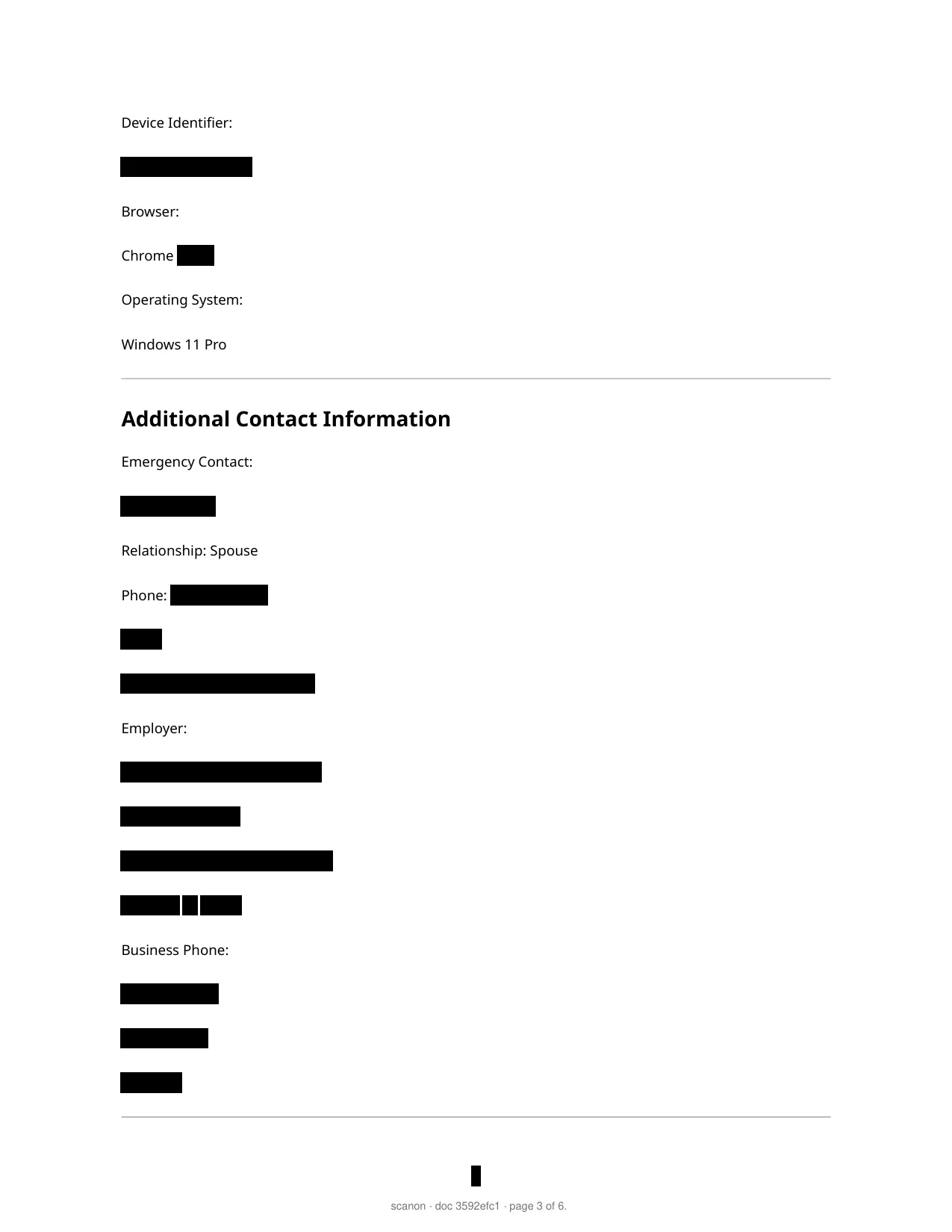
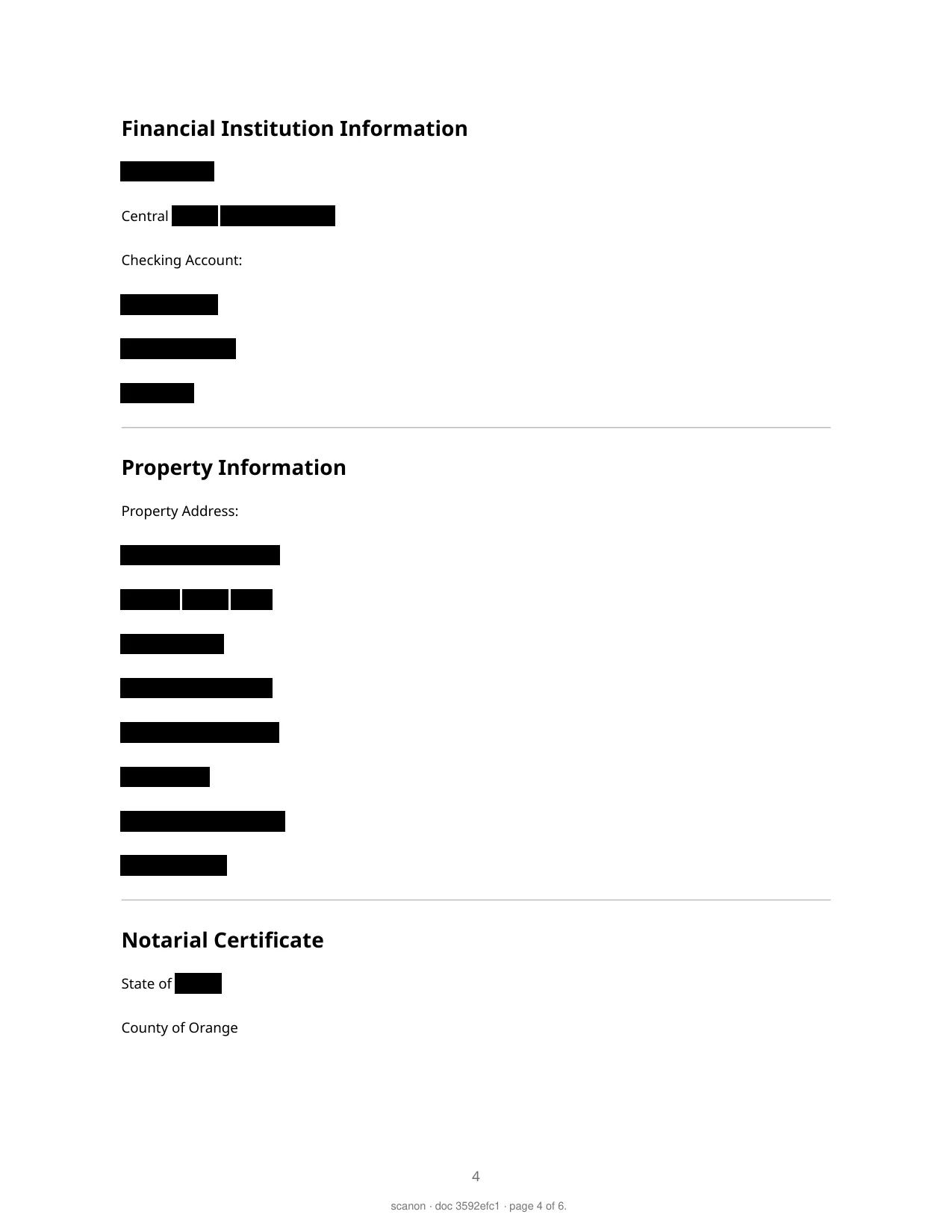
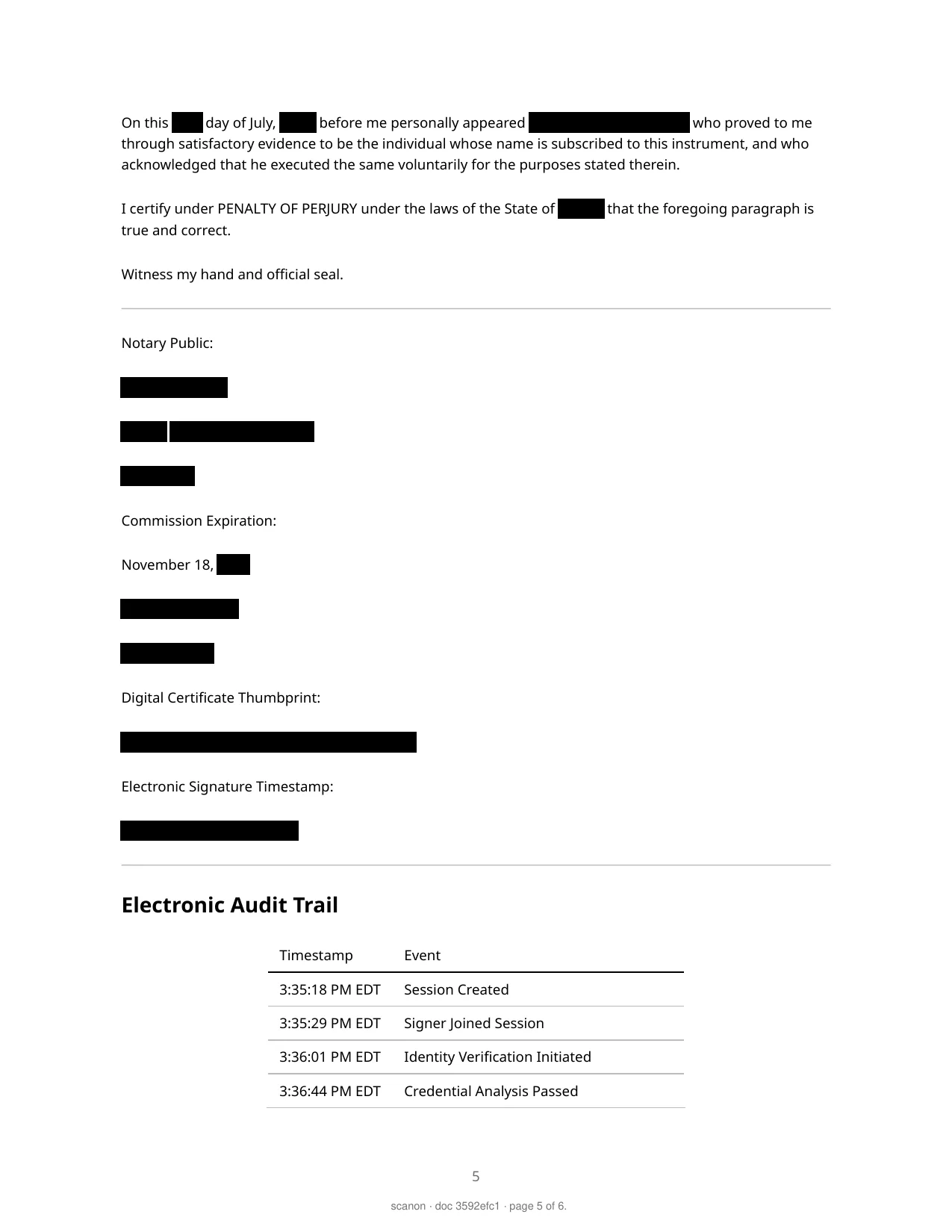
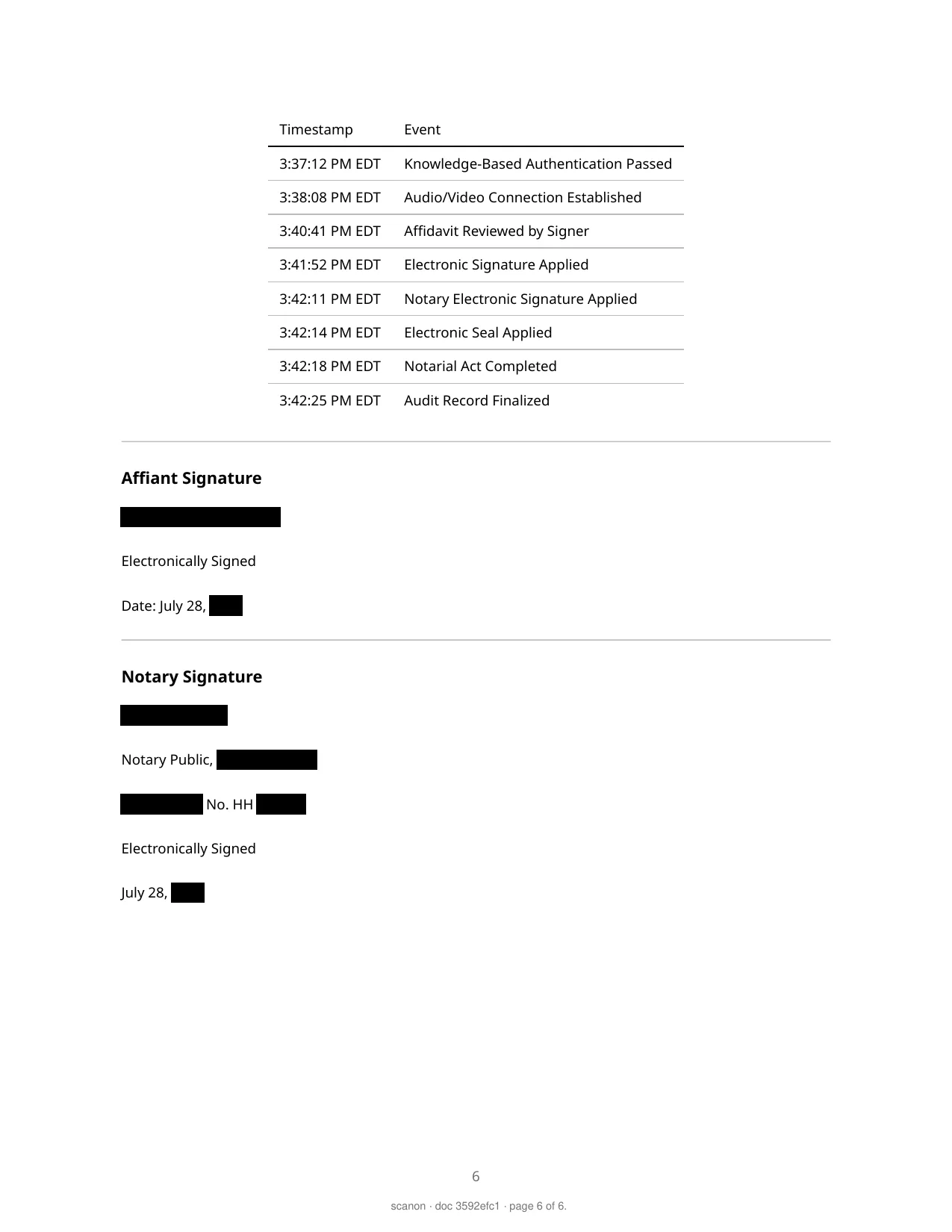
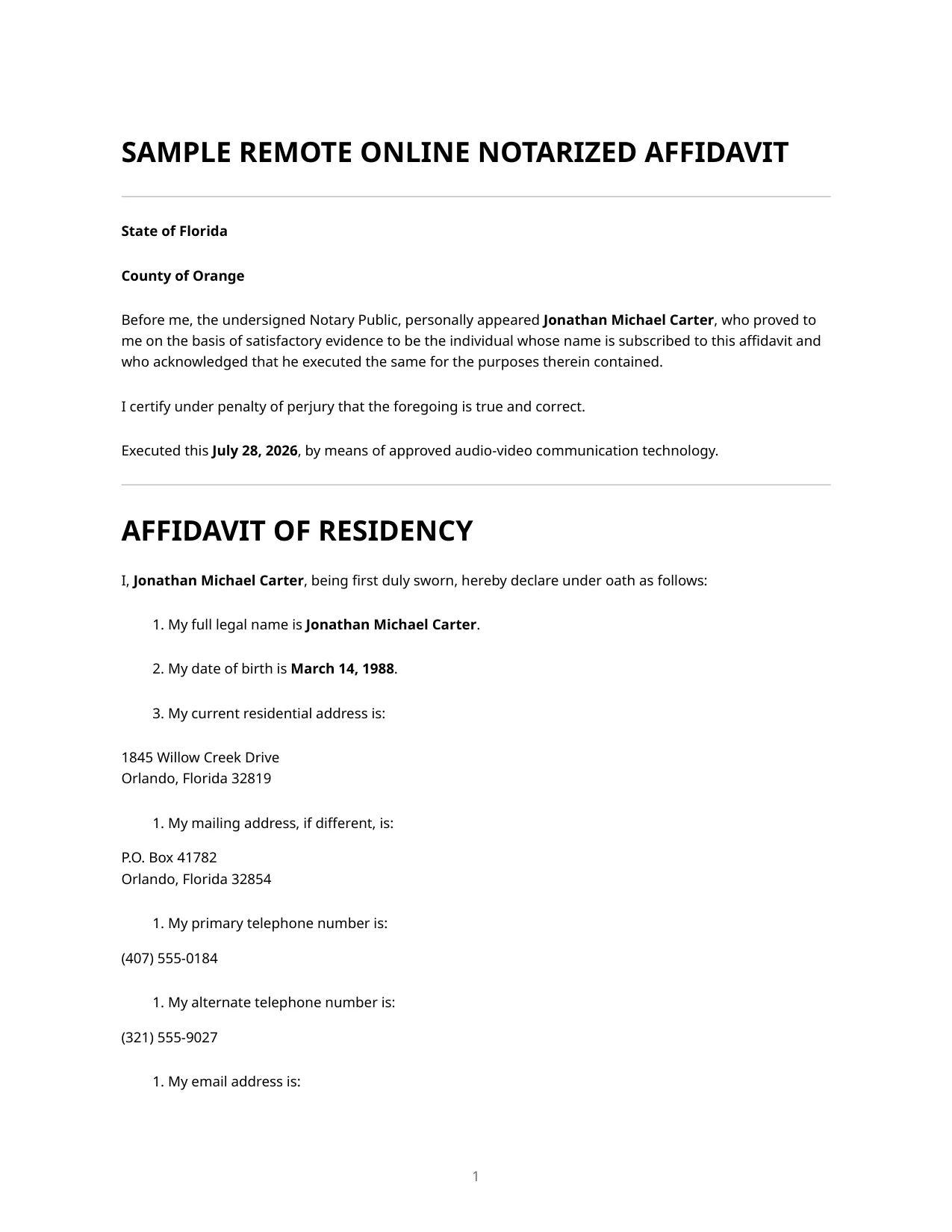
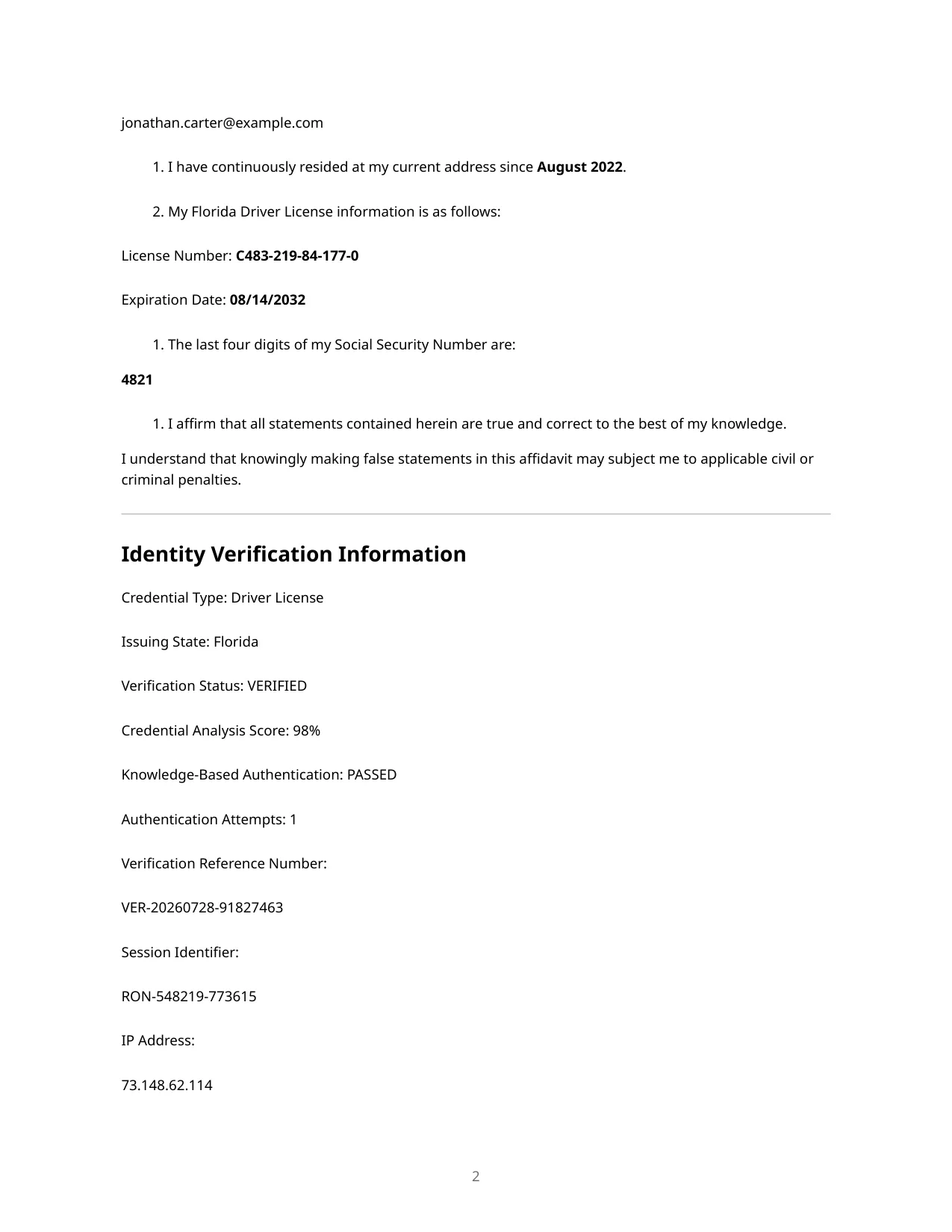
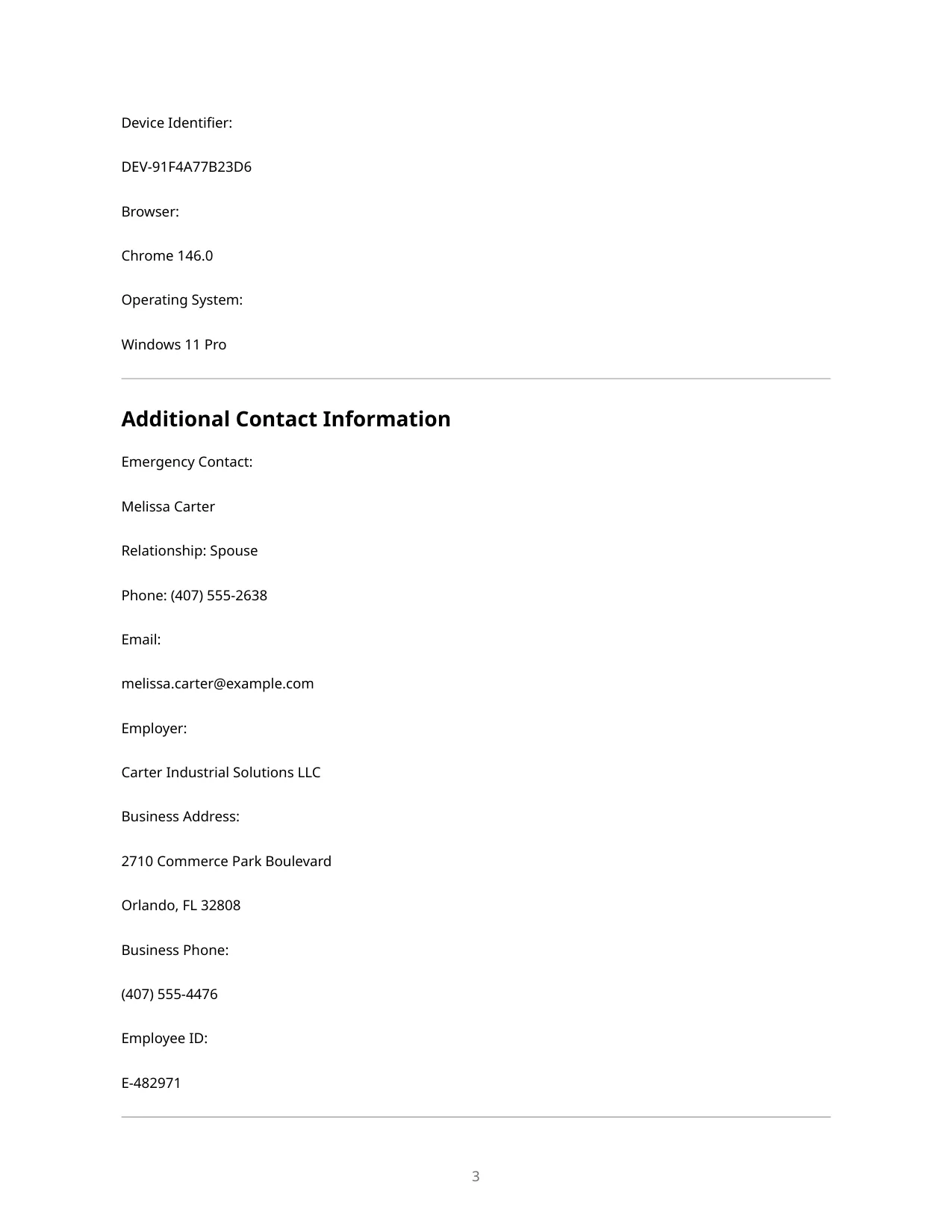
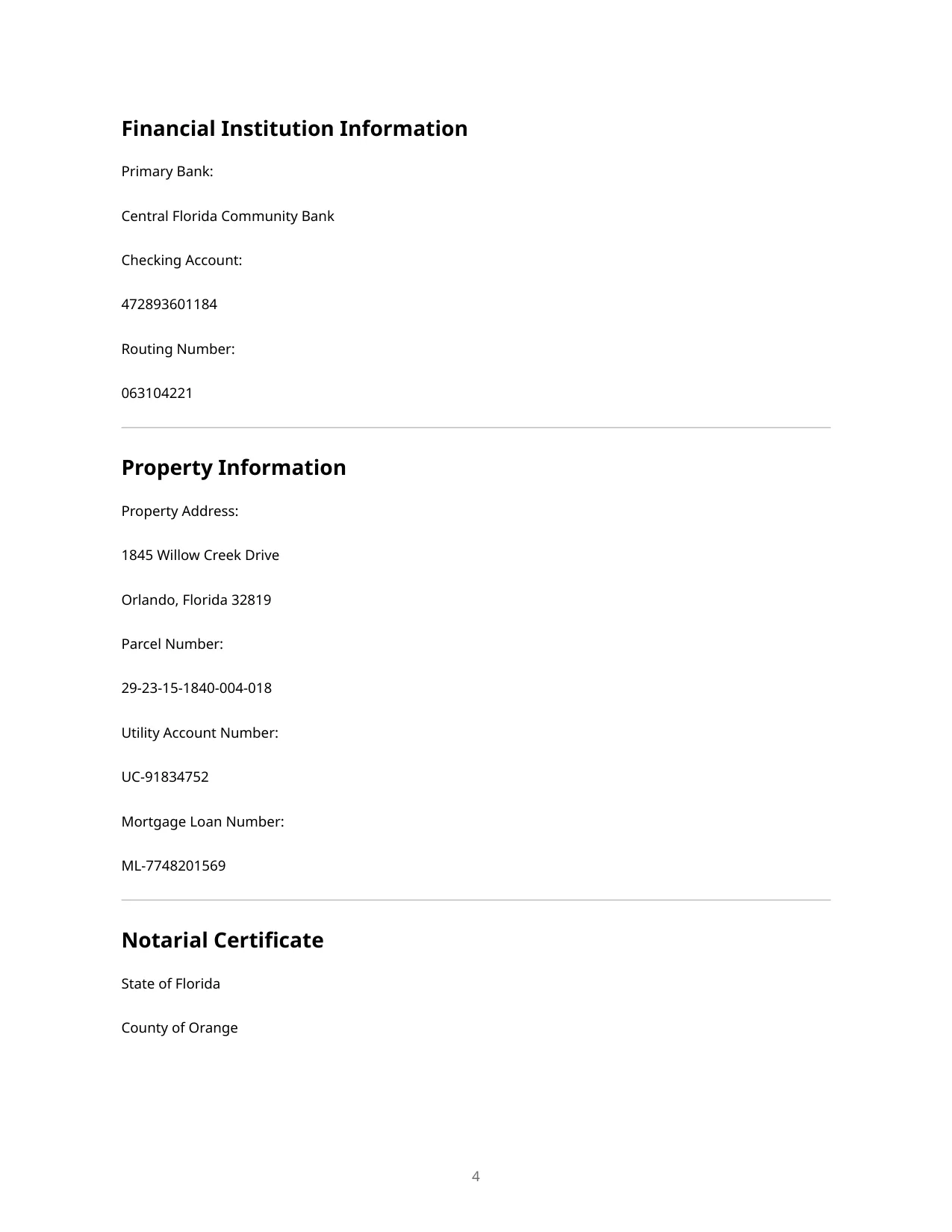
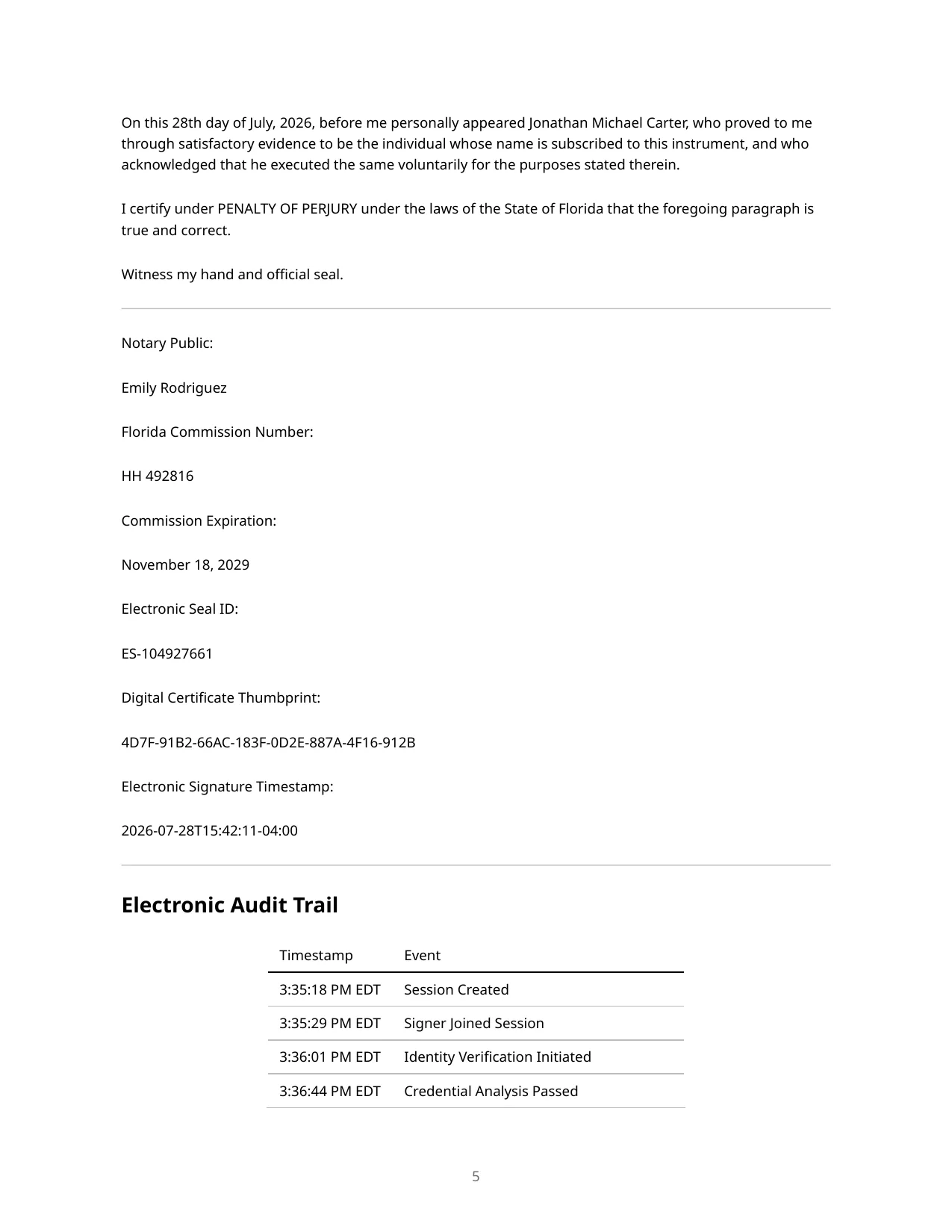
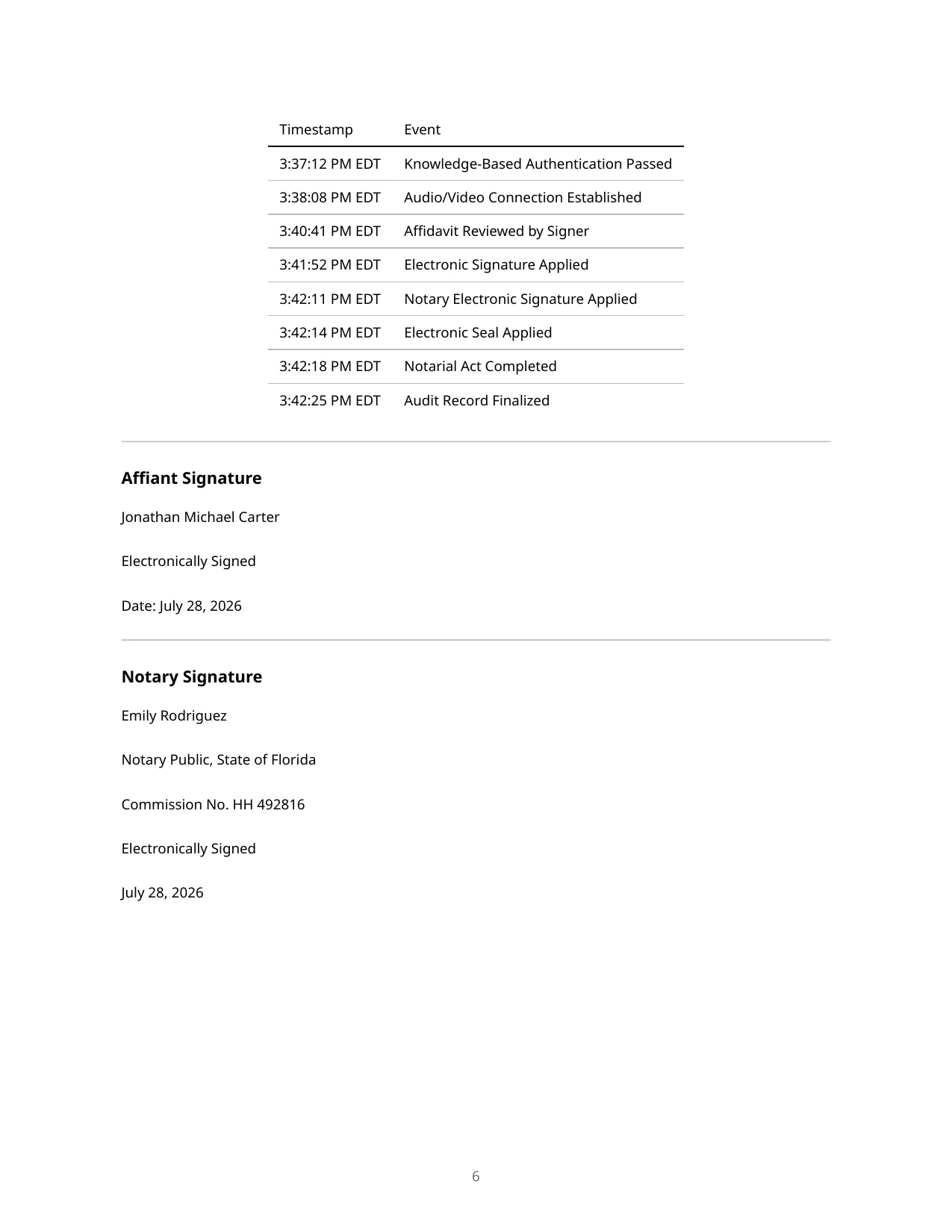
A remote online notarization affidavit. Names, dates of birth, license numbers, account and routing numbers, and IP addresses removed before the record leaves the platform.
Redacted: names, dates of birth, addresses, phone numbers, email addresses, license numbers, partial social security numbers, account numbers, routing numbers, and IP addresses.
Three steps.
Send media
Push a file or URL via REST API - or trigger at the moment your users upload.
Scanon detects PII
Faces, plates, IDs, badges, and tattoos identified across images and video.
Redacted media returned
You get the clean asset back, ready to use.
Built for this vertical, not repurposed for it.
Structured identifiers, not just names
Social security and taxpayer numbers, dates of birth, driver license numbers, account and routing numbers, IP addresses, and session identifiers — across the full document, including the audit trail.
Scanned exhibits, not only native text
OCR reads filed exhibits, faxed instruments, and photographed pages, so identifiers in scanned material are found rather than silently passed through.
The record stays a record
Per-entity policy control lets you remove the value while leaving the field label, the signature block, and the notarial certificate intact — so the document remains readable and citable.
How we handle your data.
Document results are held in an encrypted cache for a single fetch or ten minutes, whichever comes first, then purged. We never store the matched values themselves.
Coverage: faces, license plates, ID documents, badges, and tattoos - across images and video.
Supports the identifier categories named in Federal Rule of Civil Procedure 5.2 and its state analogues — social security and taxpayer numbers, dates of birth, minors' names, and financial account numbers — alongside GDPR and CCPA obligations for personal data in stored documents.
No ML infra to build. One API call.
Post a document and get it back redacted. One endpoint handles PDF, DOCX, PPTX, XLSX, ODT, TXT, and MD, with per-entity policy control over whether each identifier type is redacted, masked, hashed, or labeled. Every job returns a manifest recording what was found, on which page, and with what confidence — never the values. Redact at the moment of signing, filing, or export, so identifiers never reach your storage.
- • REST API + SDKs (Node, Python)
- • Images and video from a single endpoint
- • Redact at point of upload
POST https://api.scanon.ai/v1/documents/redact
Authorization: Bearer scanon_your_api_key
Content-Type: multipart/form-data

# multipart file=@affidavit_signed.pdf
# entities=SSN,DOB,ACCOUNT_NUMBER,ROUTING_NUMBER,IP_ADDRESS
# policy=redact  preserve_labels=true