
The privacy filter for the real world.
Scanon finds faces, license plates, screens, IDs, and sensitive text across images, video, and documents. One call, 218ms.
Used for GDPR compliance, FOIA redaction, content creation, and research anonymization.
Dedicated tools: face blur · license plate blur · document anonymization.
If it identifies someone, we find it.
Redaction is the easy half. The hard half is knowing what's in the frame — across every format your users upload, at the angles and resolutions real media actually arrives in.
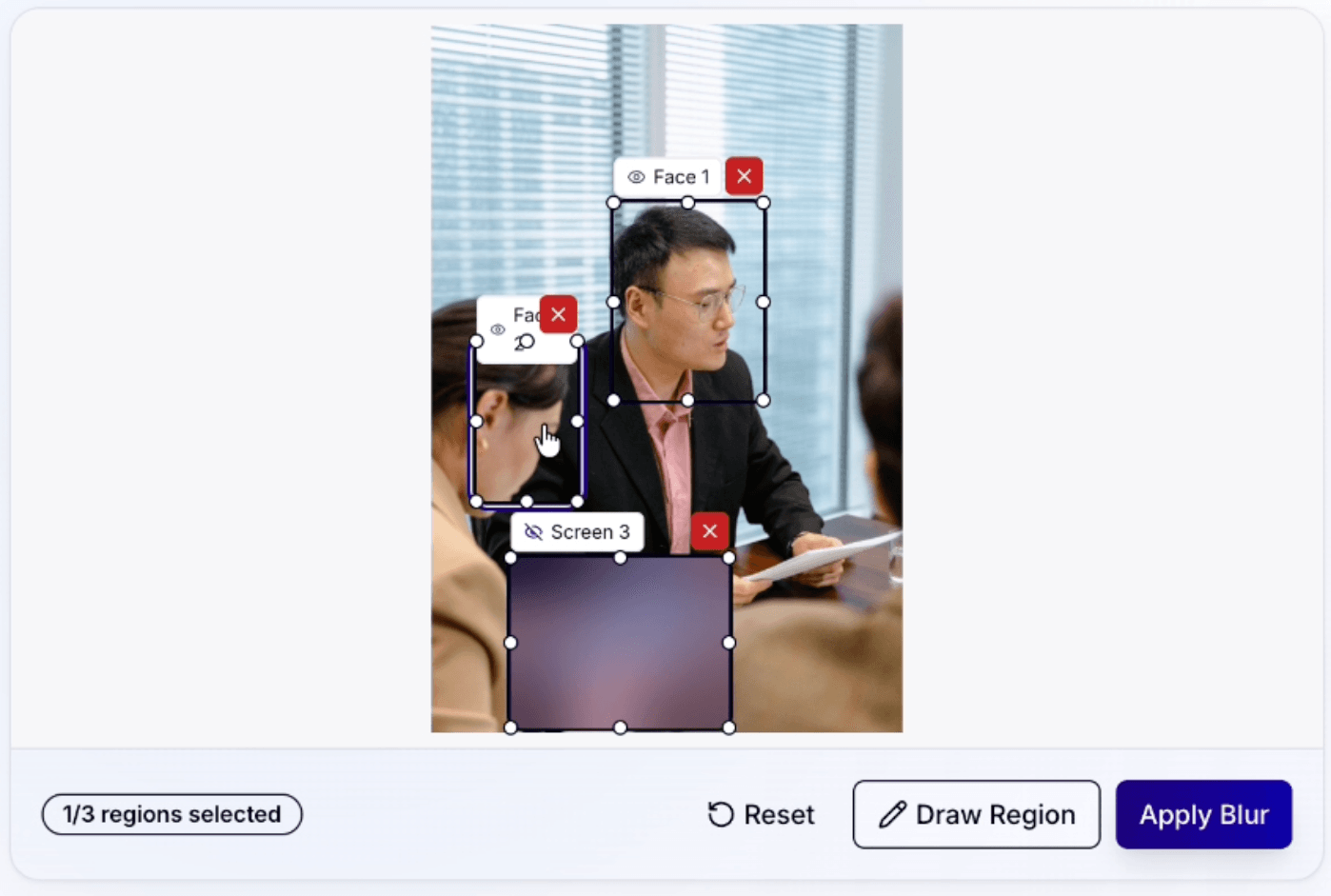
In images & video
- Faces, at angle and partially occluded
- License plates
- Screens and monitors displaying data
- Tattoos and distinguishing marks
- Badges, lanyards, and ID cards in frame
- Text baked into pixels
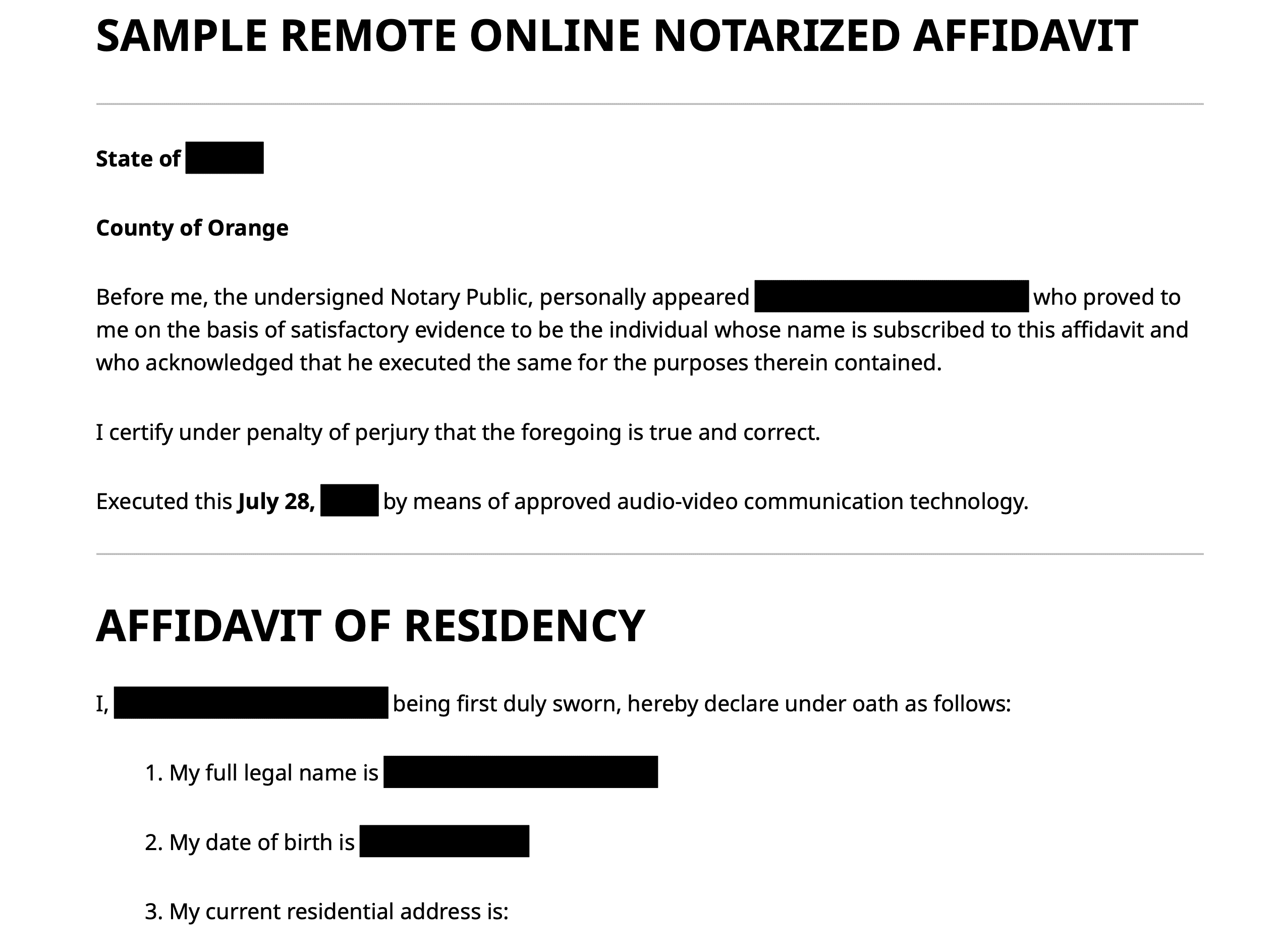
In documents
- Social security and national ID numbers
- Dates of birth and full names
- Credit card and bank account numbers
- ABA routing numbers and IBANs
- Email addresses and phone numbers
- Physical addresses
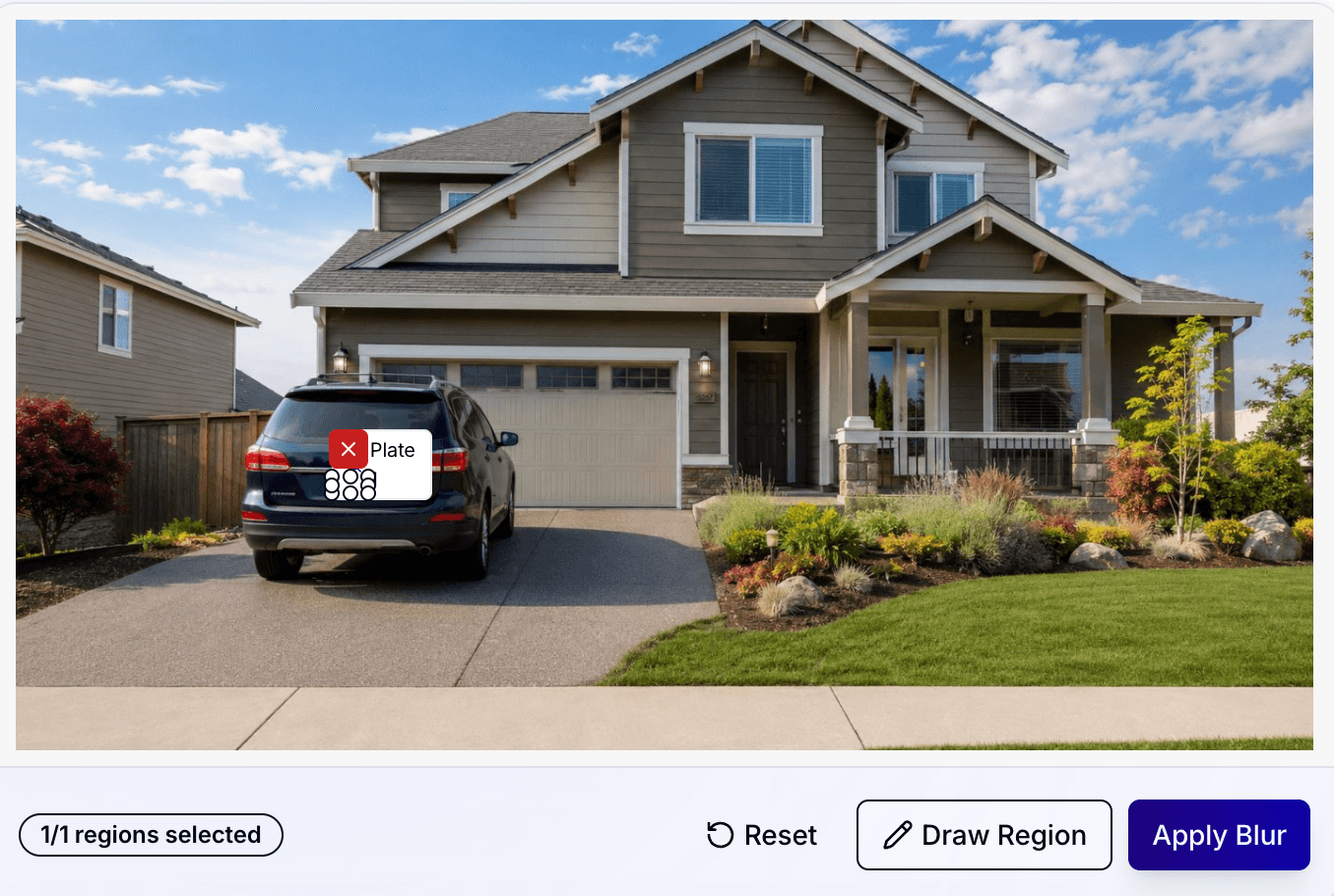
Coordinates and confidence. Never the matched values.
In the output
- Per-region confidence scores
- Bounding box coordinates
- Recognizer attribution
- Page and frame indices
- Redaction manifests for audit
- Never the matched values themselves
Detection returns what it found and how sure it is. It never returns the data itself.
Your users hand you liabilities and call them uploads.
A listing photo with a plate and a house number. A support ticket screenshot showing another customer's account. A verification document with a full SSN sitting in the same bucket as your product images. None of it was requested, all of it is now yours, and every copy in every backup extends the window in which it can become an incident. The exposure isn't in what your product does with media. It's in what arrives inside it.
It arrives faster than review. Manual review does not scale past a few hundred files a day, and it is the first thing cut when volume spikes.
It spreads. Media gets copied to CDNs, analytics pipelines, backups, and vendor tools within seconds of upload. Redacting at rest means chasing it.
It surfaces at the worst time. Usually during a security questionnaire, an enterprise deal, or an access request — when the cost of not having handled it is highest.
Sound Familiar?
The cost of getting it wrong.
Built for the teams shipping the media.
Engineering teams
Add privacy-safe redaction to your app in 3 lines of code. REST API, async video, webhooks, and SDKs for Python and Node.
Read the docs →Compliance & media teams
Bulk-redact PII from claim footage, body-cam video, news source material, and discovery documents.
For business →Your pipeline doesn't change. What moves through it does.
Media arrives once and then spreads — into storage, into your team's hands, out to whoever receives it. Scanon sits at the one point where all of that begins.
Workflow: A file you didn't get to specify. With no redaction step, raw personal information reaches four places at once: your storage, your team and vendors, whoever receives the file, and anywhere it is published.
Detect
Vision models + entity recognition
Faces, plates, screens, and marks in visual media; named entities and structured identifiers in documents. Every region returns with a confidence score and coordinates.
Redact
Blur, block, or cryptographic scramble
Choose per entity type: redact, mask, hash, or label only. Cryptographic mode AES-scrambles each region with a fresh, never-stored key, so the original pixels are unrecoverable rather than hidden.
Verify
Manifests and audit output
A per-file manifest records what was found, where, with what confidence, and by which recognizer. It never records the matched values.
Discard
Ephemeral by architecture
Video and document results live in an encrypted cache for a single fetch or ten minutes, whichever comes first, then are purged.
Playbooks for the teams shipping most of the media.
Same API. Three vertical fits.
Compared to your alternatives.
| Manual blurring | Generic AI tools | scanonscanon | |
|---|---|---|---|
| Speed per image | 8–12 min | 2–5 sec | 0.218 sec |
| Video support | Frame-by-frame manually | Limited | Async, any length |
| EXIF stripping | Sometimes | ✓ Automatic | |
| Audit trail | Manual | Limited | Per-region with confidence scores |
| API access | Some | ✓ REST + webhooks |
Common questions.
Where scanon is — and where it's going.
A transparent look at what ships today and what's next.
- August 2026Coming this month
v1.1.0
— Documents & text- PDF, DOCX, PPTX, XLSX, ODT, TXT and MD redaction — SSN, credit card, ABA routing, IBAN, email, phone
- Per-entity policy control: redact, mask, hash, or label, with configurable confidence thresholds
- Redaction manifests: per-page findings with bounding boxes, confidence scores, and recognizer attribution — never the matched values themselves
- Automatic credit return on failed jobs
- July 2026Current
v1.0.3
— API & business accounts- Public REST API — synchronous images, async video, webhooks
- Business accounts with team seats and a dedicated dashboard
- Tiered rate limiting with burst and refill per endpoint
- Python, Node, and Java examples
- June 2026
v1.0.2
— Cryptographic redaction & video- Cryptographic mode AES-scrambles each detected region with a fresh, never-stored key before blurring — original pixels are unrecoverable, not just hidden
- Expanded video format support
- Processing pipeline rebuilt — median image latency to 218ms
v1.0.1
— Plates & screens- License plate detection & redaction
- Screen / monitor content detection
- May 2026
v1.0.0
— Public beta- AI face blur for photos and video
- Adjustable blur intensity, selective face redaction
- Automatic EXIF metadata stripping
- In-memory processing